November 23, 2026. The Shanghai World Expo Exhibition & Convention Center opened its doors first; the Shanghai New International Expo Centre followed the next day. For the first time, bauma CHINA unfolded in a "one exhibition, two venues" format

COGENG bauma CHINA 2026: Commitment & New Quality Parts
On November 23, 2026, the Shanghai World Expo Exhibition & Convention Center was the first to open its doors, and the Shanghai New International Expo Centre took over the next day. For the first time, bauma CHINA appeared in a "one exhibition, two venues" format. With a total exhibition scale of 400,000 square meters and 4,120 exhibiting companies from 34 countries and regions around the world, the theme "New Quality Without Boundaries · Coexisting Future" was no longer just a slogan — it became a tangible industry scene. For Cogeng, walking into these exhibition halls was not about competing with giants on the stage for whole-machine tonnage or the number of debuts. Rather, it carried a clear self-question: as the "new quality" wave in engineering machinery accelerates the restructuring of the industrial chain, where does a company rooted in Guangzhou and deeply engaged in equipment circulation and services stand, and where does its value lie?
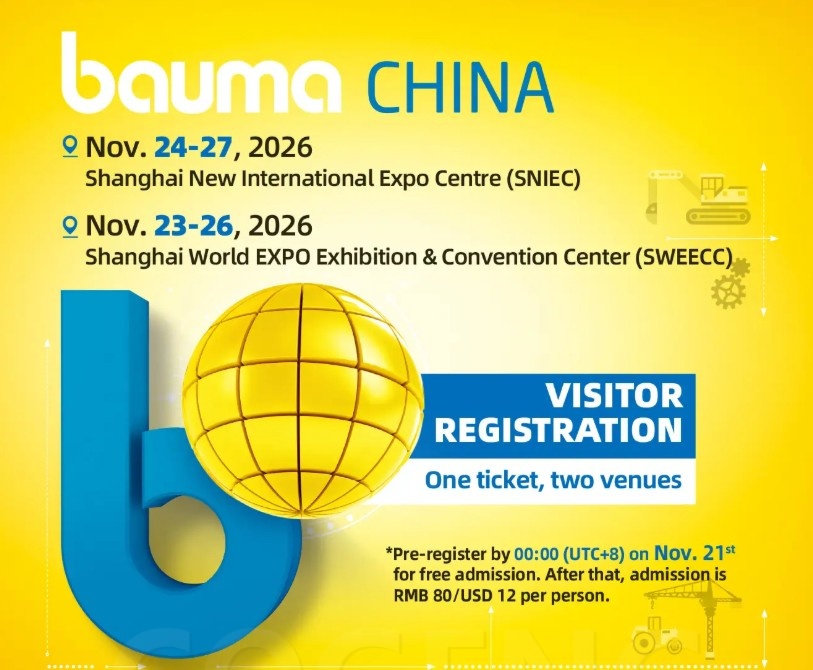
Cogeng's answer was hidden in the shuttling between the exhibition halls. The two venues of this edition each had their own focus: the New International Expo Centre focused on large whole machines, earthmoving and mining, and drivetrain and hydraulic components, while the Expo Center brought intelligent technology, new energy, and the green low-carbon ecosystem to the forefront, with the three major scenarios of "unmanned mines," "smart factories," and "green smart construction" directly presented to visitors. On one side was the hardcore aura of steel behemoths; on the other was the silent contest of batteries, electronic controls, algorithms, and data flows. The two temperaments coexisted within just a few kilometers, precisely sketching the most authentic cross-section of the current engineering machinery industry: green and intelligent are no longer "bonus questions" but underlying variables that reshape product definitions, service models, and even circulation logic.
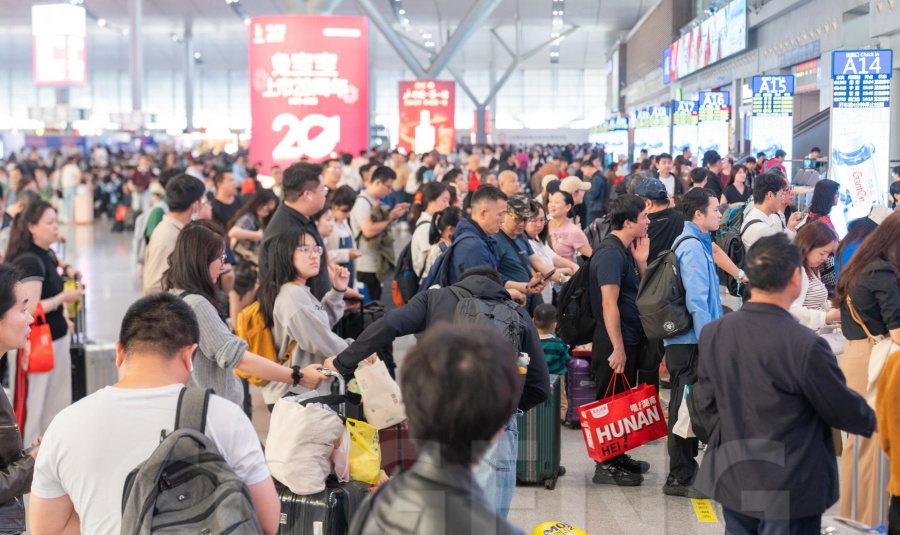
In the new energy exhibition area, the changes were particularly intuitive. At the previous edition, electrified products mostly attracted attention as "single-product debuts," but by 2026, from pure electric loaders and electric excavators to hybrid mining trucks and hydrogen energy solutions, a full-series, full-lifecycle electrification picture had unfolded. More noteworthy was that many small and medium-sized enterprises had put forward implementable solutions in the fields of "oil-to-electric" conversion and low-carbon technical services. One exhibitor's power green retrofit route could reduce the operating cost of traditional fuel equipment by 85% and the one-time procurement cost by 50%. For a service-oriented enterprise like Cogeng that stays close to end users, the significance of such signals far exceeds the release of any single flagship new machine. The green upgrade needs of a large stock of equipment, the electrification replacement rhythm of rental fleets, and the residual value assessment and circulation paths of second-hand equipment are all spawning new service entry points. During the exhibition, Cogeng connected with multiple electrification supporting enterprises and retrofit service providers. The purpose was not simply to "look at products" but to understand the technical routes clearly and connect the service interfaces to its own customer network.
The impact of intelligence was equally concrete. Leading enterprises brought collaborative operation of unmanned road rollers and voice-controlled unmanned excavators into the dynamic demonstration area, and AI began to be systematically embedded in the full lifecycle of products. But what Cogeng paid more attention to was the real gap when "intelligence" lands in the circulation and service links: when end users buy an intelligent device, they often also need supporting operation training, data access, maintenance response, and residual value management. Host manufacturers can make equipment increasingly "smart," but for equipment to truly "run" and be "well managed" on the construction site, localized service forces are indispensable. At the exhibition, Cogeng discussed with several digital solution providers the possibility of lightweight deployment of equipment management systems — not pursuing a "big platform," but embedding basic functions such as intelligent maintenance reminders and fleet scheduling into existing customer service processes, so that small and medium-sized construction enterprises and leasing companies can reach the threshold of digitalization at an affordable cost.
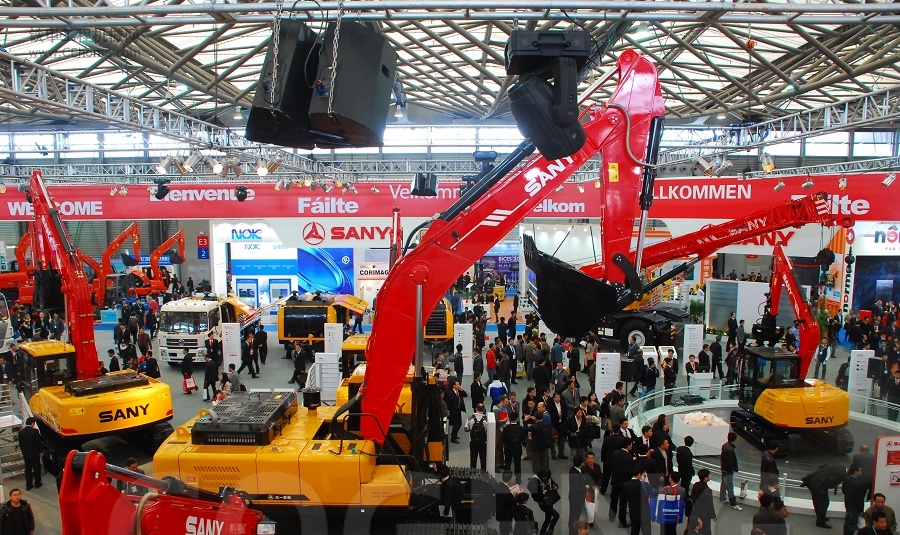
Internationalization was another hidden thread running through the exhibition halls. bauma CHINA has never been just an internal gathering of Chinese enterprises. Relying on the global bauma network, it builds bridges for Chinese enterprises to "go global" and for international enterprises to "come in." Cogeng's business scope already covers the import and export of goods and technology, and in its daily operations it has long felt the growing interest of overseas customers in Chinese engineering machinery supporting products and services. At the exhibition, buyers from the Middle East, Southeast Asia, and Africa showed a notably increased demand for "whole machine + parts + service package" combinations, and simple price comparisons were giving way to examinations of delivery stability and after-sales response capability. Cogeng's exhibition team received several batches of overseas merchants within two days, and a considerable portion of their demands were not about finding a certain whole machine but about finding a reliable node that could provide long-term docking for parts supply, technical consulting, and small-batch mixed-load shipping. This is precisely Cogeng's natural position as a circulation service enterprise: it does not manufacture equipment, but makes equipment flow more smoothly; it does not do terminal construction, but enables construction parties to buy with clarity and use with confidence.
Of course, a small and medium-sized service enterprise in a 400,000-square-meter exhibition hall will inevitably feel a certain "scale gap." The crowds, lights, and signing ceremonies at the giants' booths formed a sharp contrast with the relatively quiet business negotiations at Cogeng's booth. But it was precisely this contrast that helped Cogeng calibrate its exhibition strategy more honestly. The company did not invest resources in building a large booth to pursue a "sense of presence" but instead focused on target-oriented scheduled meetings and targeted visits to upstream and downstream supply chain partners. Over the few days, the gains were not about how many business cards were collected, but about reaching preliminary intentions for parts distribution with three electrification supporting enterprises, confirming pilot plans for lightweight management tools for rental customers with two digital service providers, and establishing communication channels for parts supply with a batch of overseas buyers. For Cogeng, the value of bauma CHINA does not lie in "being seen" but in being found by the right people in the right position.
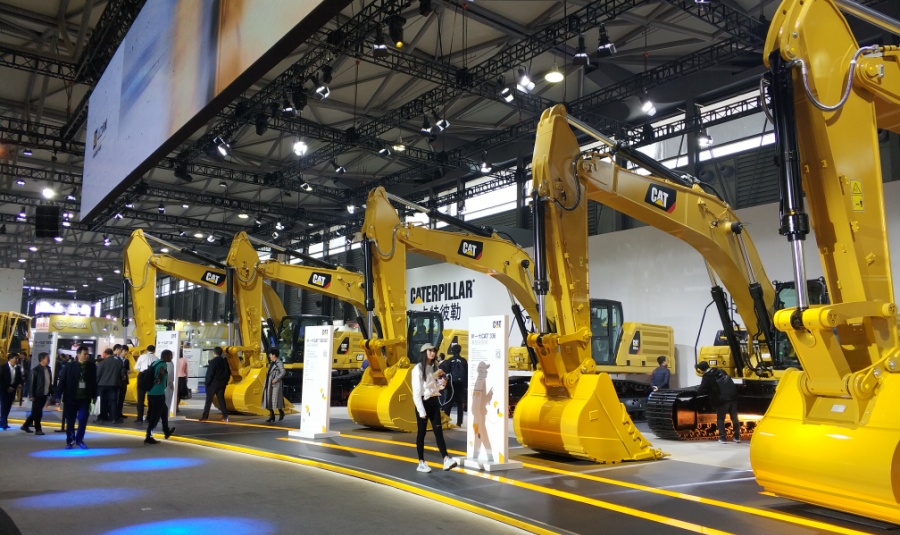
Looking back at this edition of the exhibition, the deepest impression that the theme "New Quality Without Boundaries, Coexisting Future" left on Cogeng was the word "coexistence." Competition in the engineering machinery industry is no longer a contest of single-point products but a chain-to-chain collaboration from core components and whole-machine manufacturing to circulation distribution and aftermarket services. Host manufacturers are pursuing numerical leaps in electrification rates and intelligence rates, but for these numbers to ultimately translate into efficiency and cost advantages on the construction site, circulation service providers are needed to translate technical language into solutions that users can understand and use. What Cogeng confirmed on this trip was precisely such a role self-awareness: to be the "adaptation layer" of the green and intelligent waves at the end of circulation and service, filtering, transforming, and sinking the cutting-edge signals from the exhibition and bringing them to the small and medium-sized construction enterprises and leasing companies that may not personally visit the Shanghai exhibition halls. The exhibition period of bauma CHINA is only five days, but the renewal of the industrial ecosystem is a long-term process. What Cogeng took away was not an exhibition summary but a roadmap for re-positioning itself in the "new quality" coordinate system. When the two venues open again next time, Cogeng hopes to bring back service samples that have already been proven and a deeper layer of industrial connection.
Contact COGENG
📞 Phone: +86-185-2913-1515 🌐 Instagram
📧 Email: hugo@cogeng.net 🌐 Facebook:Excavator Parts Selection and Replacement Community
💬 WhatsApp +86-185-2913-1515 Facebook: Excavator Wiring Harness
💬 WeChat: +86-185-7865-1106 Facebook: Excavator Wire Harness
🌐 Website: cogeng.net Facebook: Excavator SolenoidValve
Excavator Solenoid Valve Excavator Wiring Harness Excavator Seal Kit
Excavator Pressure Sensor Excavator Revolution Sensor Excavator Water Temp Sensor
Excavator Control Panel Excavator Switch Parts Excavator Motors
Excavator Hydraulic Pump Excavator Other parts Excavator Engine Oil